
Abatement Technologies Air Duct Cleaning in Kaysville: A Homeowner’s Guide
Most homeowners judge duct cleaning equipment by what comes out of the vents. The more useful question is what stays inside the machine. Abatement Technologies builds HEPA-rated negative air machines for containment work, and that changes what professional duct cleaning can safely do in a Kaysville home. This guide explains what that equipment class does, when it matters, and how to confirm a company actually brings it.
What Are Abatement Technologies Machines Actually Built For?
Abatement Technologies equipment is designed for containment and source removal, not simple dust collection. These machines were developed for remediation work where airborne particles must be captured and held, not just stirred up and pushed elsewhere. A HEPA-rated negative air machine pulls contaminated air through filters capable of trapping particles far smaller than what standard vacuums capture, and it keeps the work zone under negative pressure so contaminants move toward the machine rather than into the next room.
In a duct cleaning context, that means three things happen at once. The duct section being worked is isolated, air in that section flows toward the HEPA unit, and the surrounding living space stays out of the airstream. For a home in Kaysville where the furnace has been running through a long, dusty summer and a cold winter, that separation matters. A standard shop vacuum with a bag filter captures the big debris and returns the fine particles to the room. In our experience, that’s the difference homeowners actually notice on cleaning day: one approach leaves a film on the furniture, the other doesn’t.
How Does HEPA Negative Air Pressure Prevent Cross-Contamination?
HEPA negative air pressure keeps debris moving toward the machine instead of leaking between duct sections or back into living spaces. Here’s the mechanism in plain terms.
Ductwork is a connected system. When a technician loosens debris in one branch, air movement in the rest of the system can carry that material to another room, a return grille, or the air handler if the pressure isn’t managed. A HEPA negative air machine sets up a controlled pressure differential: the isolated section is held at lower pressure than the room, so any air leaks at joints, seams, or register boots flow inward. The trapped particles end up in the filter bank, not in a bedroom.
- Isolation: the working section is sealed off from the rest of the system before cleaning begins.
- Directional airflow: negative pressure pulls air (and debris) toward the HEPA unit.
- Capture at the source: particles are trapped in HEPA filters rather than redistributed.
- Containment between sections: work on one branch doesn’t contaminate a branch already cleaned.
For Kaysville homes with finished basements or bedroom wings off a single trunk line, that isolation is the whole point. Clean one side, then the other, without undoing your own work.
Routine Maintenance vs. Post-Remediation Cleaning: What’s the Difference?
Routine maintenance removes accumulated dust and debris from a system that’s otherwise healthy. Post-remediation cleaning handles a system that has been exposed to mold, smoke, renovation dust, or a contamination event, and it requires containment-grade equipment because the load is higher and the particles are finer. Both jobs start with an inspection, but they don’t ask the same thing of the equipment.
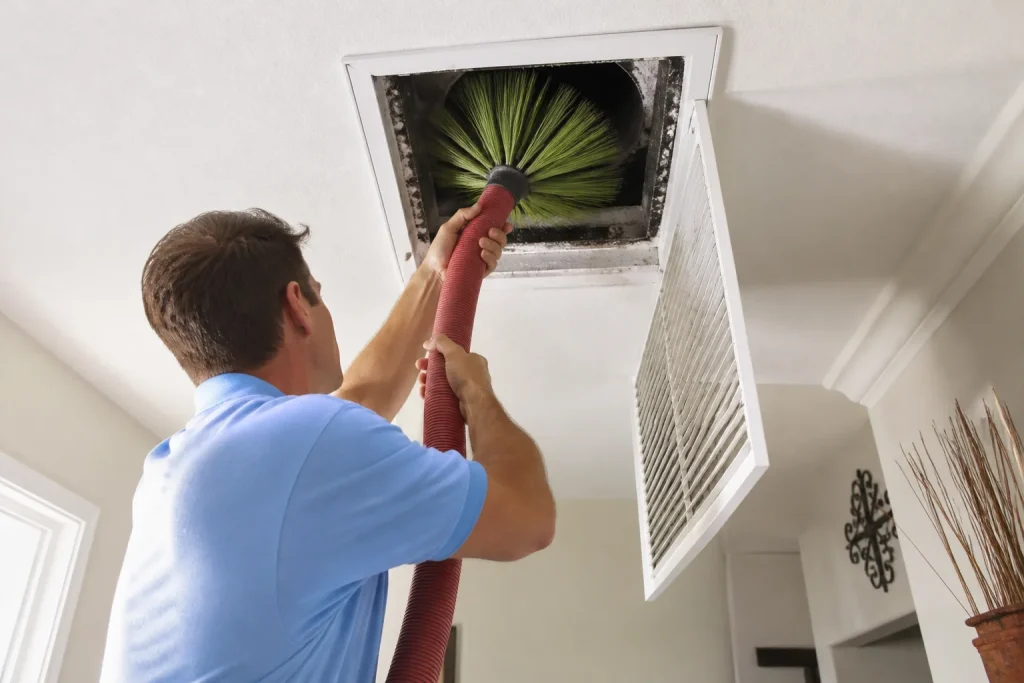
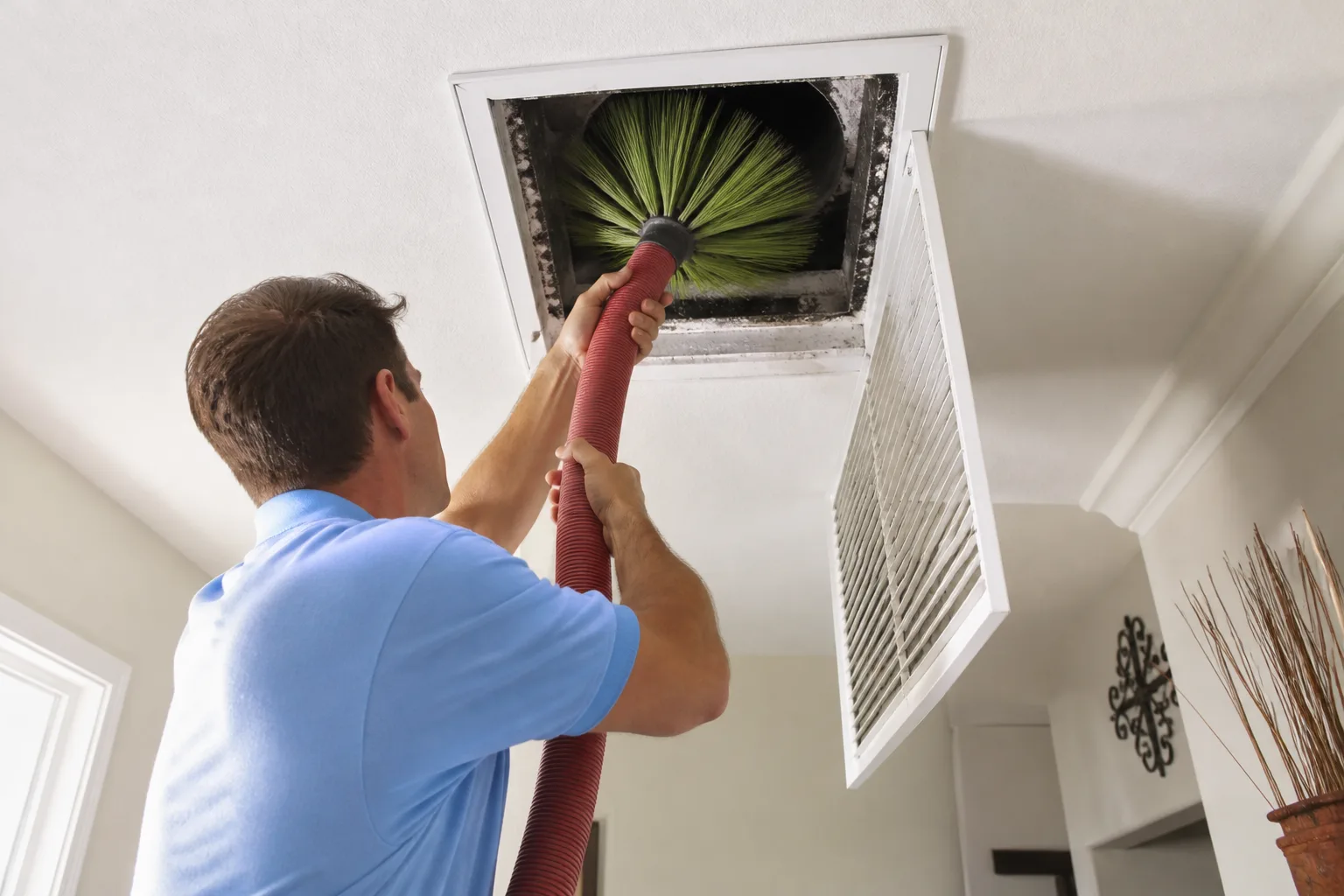
A typical maintenance clean in Kaysville runs source removal through the supply and return runs, the plenum, and the air handler with rotary agitation and HEPA vacuuming. That’s a well-defined job and a good rotary-brush system handles it well.
Post-remediation cleaning adds a higher standard of capture. After a remodel, drywall dust and silica settle deep in the ducts and cling to surfaces a standard vacuum can’t safely lift without releasing it. After smoke exposure, fine soot particles redistribute easily. With a mold concern, spores need to be contained at the source, not scattered. In those scenarios, Abatement Technologies equipment is the appropriate tier because containment is what keeps a cleaning job from becoming a redistribution job. We mention this not to alarm anyone – most Kaysville homes don’t need it – but to explain why some jobs are quoted differently and take longer.
Why Don’t Most Residential Duct Cleaners Use This Equipment?
Most residential duct cleaners don’t use Abatement Technologies-class equipment because it carries real cost, real training requirements, and adds job complexity. Three reasons stand out.
- Cost: a HEPA-rated negative air machine is a significant capital purchase compared to a portable shop vacuum. For a company doing routine maintenance only, the return isn’t there.
- Training: setting up containment, managing pressure differentials, and handling remediation-level jobs takes training beyond what a basic cleaning course covers.
- Job complexity: containment work takes longer, requires more setup, and demands judgment about when the job is done. That doesn’t fit a quick-turnaround model.
The result is a market split. Many companies carry a rotary-brush system and a portable vacuum and do good routine work. Fewer invest in the containment tier because it only pays off for the harder jobs. For a Kaysville homeowner, that’s not a knock on the simpler setup – it’s a signal about which questions to ask when a company’s marketing mentions “HEPA” without saying which machine is actually on the truck.
If you’d rather skip the research and get a straight assessment, call (877) 792-5756. The estimate is free and the price is set per job by the written estimate.
What Should Kaysville Homeowners Ask to Verify the Equipment?
Ask directly which machines will be on site and whether containment is part of the job. The answers separate a company that uses professional-grade equipment from one that advertises it. A few questions do most of the work:
- “What make and model of vacuum will you use in my ducts?” A specific answer – Rotobrush, Nikro, Abatement Technologies, or a comparable HEPA unit – tells you the technician knows the equipment. A vague “industrial vacuum” is a flag.
- “Will you set up containment or negative pressure?” If the answer is no for a routine clean, that’s normal. If the answer is no for a post-renovation or mold concern, walk away.
- “Can you show me before-and-after photos of the ducts you clean?” Photos taken during the job, of your own system, confirm the work actually happened.
- “Do you also repair and seal ducts?” A cleaning company that only cleans can’t fix the leaks it finds. Duct repair and sealing belong in the same visit as cleaning, not a separate contractor later.
- “What does the written estimate cover, and is it a flat price per system?” One flat price agreed before work starts is how you avoid the bait-and-switch pricing that plagues this trade.
Those five questions are the filter. Any reputable Kaysville company should answer them without flinching.
When Should You Call a Pro Instead of Waiting?
Call a pro when the symptoms point at the duct system rather than the air around it. Warning signs we hear about in Kaysville include:
- Allergy-type symptoms that get worse when the HVAC runs and improve when it’s off.
- Visible dust puffing from supply registers when the system kicks on.
- Rising energy bills with no change in how the house is used – often a sign of leaking ducts, not just dirty ones.
- A recent renovation, smoke event, or water intrusion that left debris or moisture in the system.
- Uneven heating or cooling between rooms, which points to duct leakage or blockages.
A single symptom isn’t a diagnosis. But two or three together, especially after a remodel or a long heating season, are worth an inspection. A proper inspection identifies the problem before any cleaning starts. That’s the whole point: we find the problem, then fix it. Cleaning a system with a leak or a broken joint just moves dirt past the gap. Sealing the gap is what actually protects what your family breathes every day.
Related services in Kaysville: if the inspection points at the system, we handle air duct cleaning, and if airflow and efficiency are the concern, HVAC cleaning covers the air handler and coils. If your dryer is taking longer to dry a load, dryer vent cleaning is worth scheduling alongside. And for readers who want a broader overview, our Kaysville Air Duct Cleaning page covers the full range of services.
What About Whole-Home Air Quality Upgrades?
Cleaning and sealing is the foundation, but some Kaysville homes benefit from filtration and humidity control at the system level. That’s where products like Aprilaire and Honeywell come in. A whole-home media filter installs at the air handler and captures fine particles across every return, which is a meaningful upgrade over a standard 1-inch filter that surfaces and air handlers often underperform with. A steam humidifier or a fresh-air ventilation system can address dry winter air or tight-house ventilation problems common in newer Kaysville construction.
These are long-term fixes, not add-ons. The rule we follow is simple: clean and seal first, then decide whether a filtration or humidity upgrade makes sense for this house. Installing gear into a leaking system wastes the gear. If you’d like us to look at both together, one visit can cover the diagnosis.
The Bottom Line
Abatement Technologies equipment matters because it changes how a duct cleaning job is contained, not just how it’s advertised. HEPA negative air pressure keeps debris moving toward the machine and out of your living space, which is the difference between cleaning a system and redistributing dirt through it. Most homes in Kaysville only need routine maintenance, and a good rotary-brush and HEPA setup handles that well. Post-remediation jobs, renovation debris, and smoke or mold concerns are where the higher equipment tier earns its keep.
Ask which machines are on site, ask whether containment is part of the job, and ask for before-and-after photos of your own ducts. A company confident in its equipment will welcome the questions. If you’re in Kaysville and need help, Kaysville Air Duct Cleaning offers free estimates – call (877) 792-5756. We answer 24/7. Fast dispatch from 7am to 7pm, Sunday through Friday.
Frequently Asked Questions
Usually, yes – a routine maintenance clean does not require containment-grade equipment, and a standard rotary-brush and HEPA vacuum setup handles it well. The higher tier is appropriate when the system has been exposed to mold, smoke, renovation dust, or another contamination event. Ask for an inspection first and let the findings decide.
Look at the machine on site and ask for the make and model. Rotobrush, Nikro, and Abatement Technologies equipment is identifiable. If the technician can’t tell you what they’re using, or the equipment looks like a shop vacuum with a bag, that’s your answer. Call (877) 792-5756 for an exact quote – estimates are free.
It matters less for a routine clean than for a post-remediation job, but it still matters. HEPA filtration on the vacuum keeps fine particles out of the room the technician is working in, and a rotary-brush system loosens debris that suction alone leaves behind. Ask about both when you get a quote.
There’s no universal schedule – it depends on the home, the filters in use, pets, local dust, and whether there’s been a renovation or a contamination event. A reasonable starting point is an inspection when symptoms show up: rising dust, allergy complaints when the system runs, or uneven airflow. If you’re in Kaysville and unsure, call (877) 792-5756 and we’ll walk you through what an inspection would look at.
Written by the team at Kaysville Air Duct Cleaning.
Need Air Duct Cleaning Help?
Call Kaysville Air Duct Cleaning - the local pro we connect you with is licensed and insured, with free written estimates in Kaysville.
(877) 792-5756