
Last updated November 24, 2026
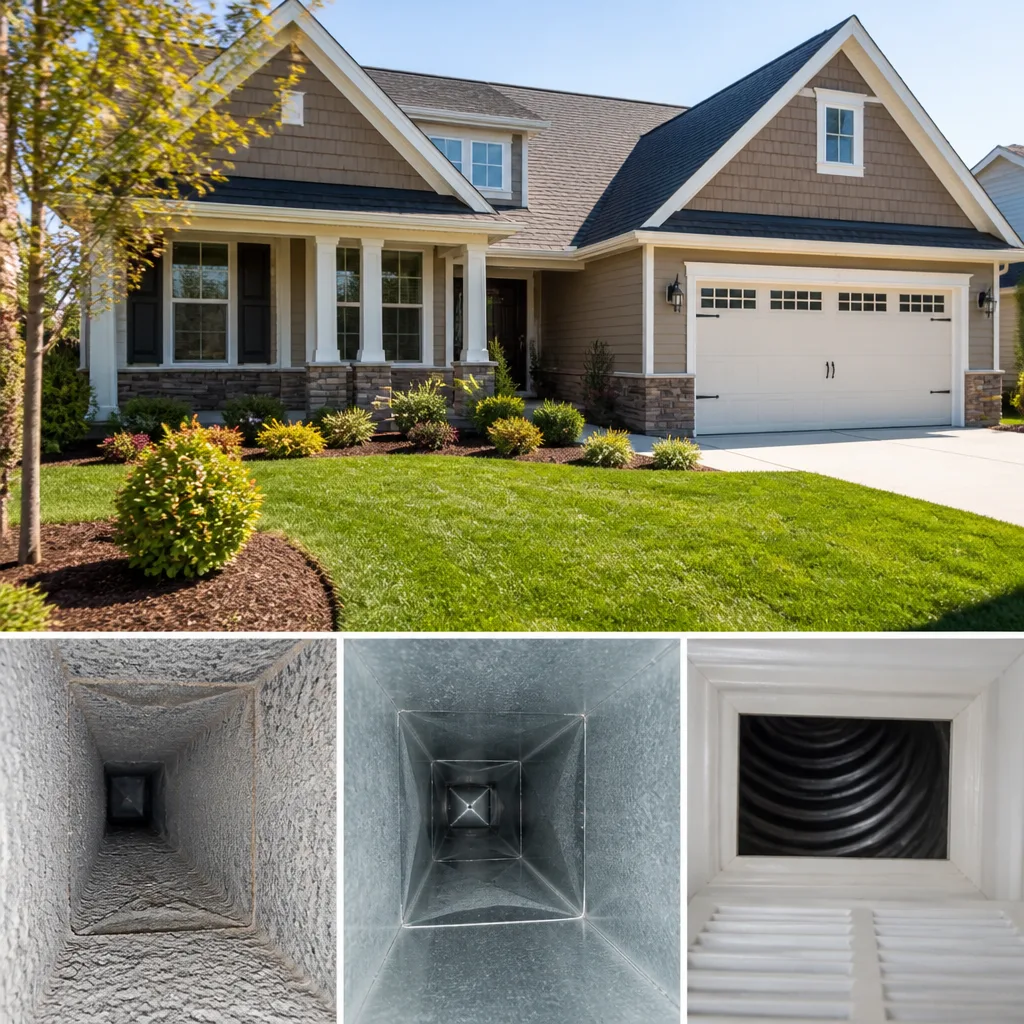 Whole-home duct cleaning
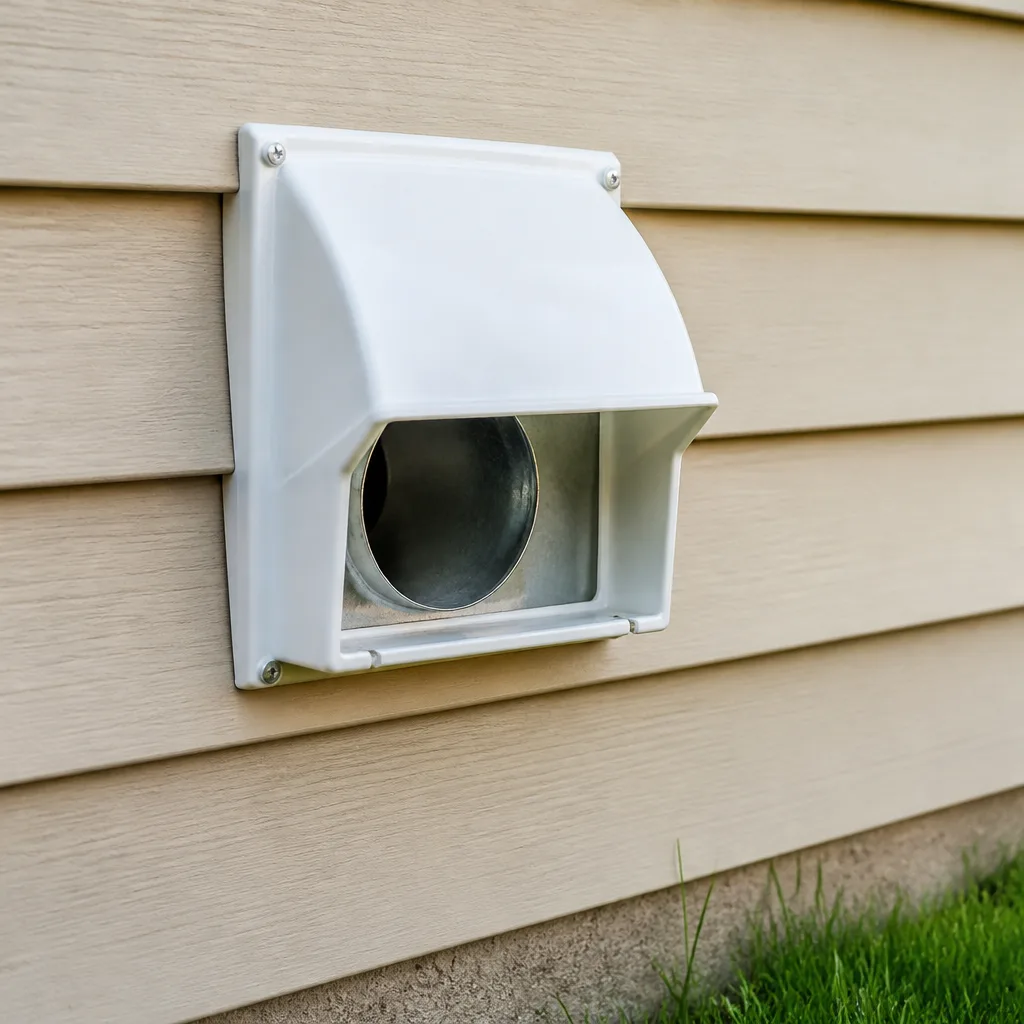 Dryer vent cleaning
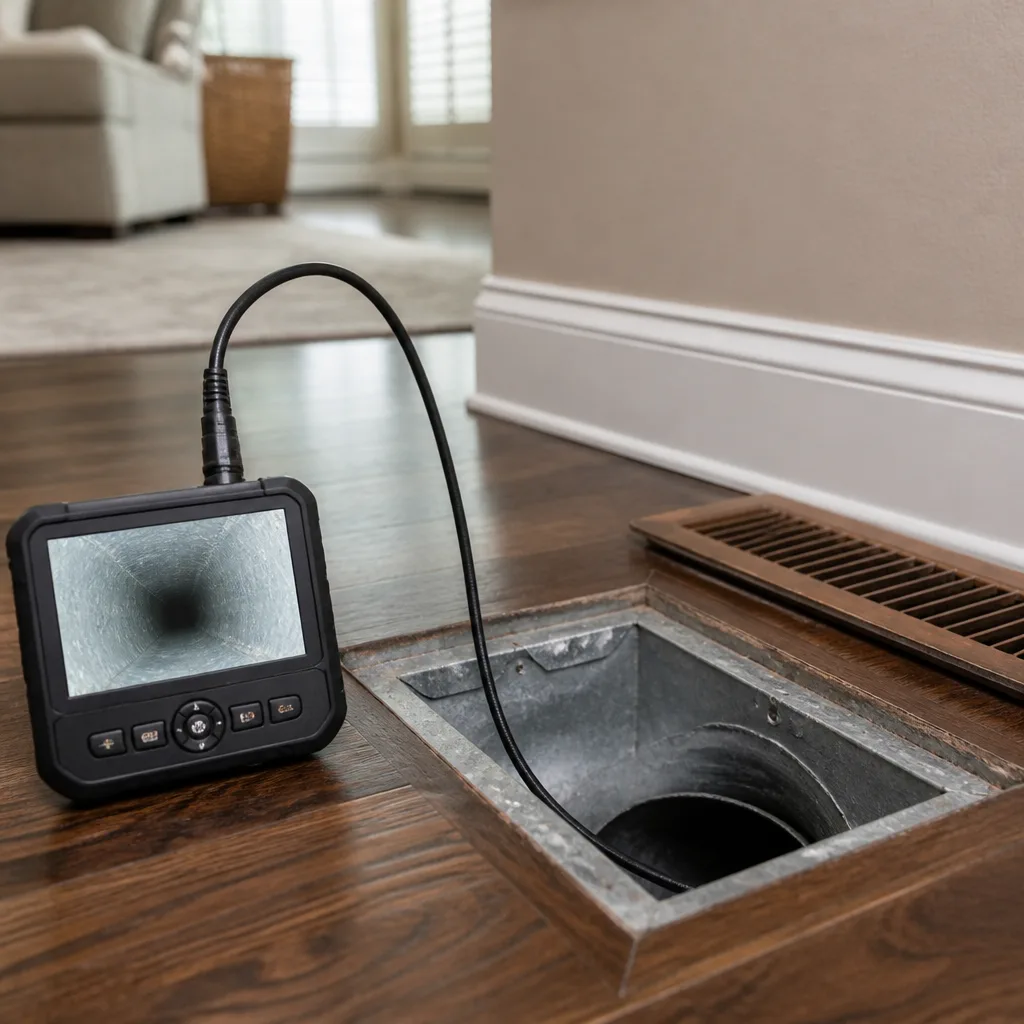 Camera inspection
 Sanitizing & deodorizing
Whole-system duct and dryer vent check with before-and-after photos - you see exactly what came out of your vents
That "$99 whole-house special" is a bait ad - the real number appears once they are in your hallway, or the "clean" is a shop-vac at the register. We photograph the inside of your ducts before and after instead.
Air Duct Cleaning Warning Signs: A Kaysville Homeowner’s Reference Guide
Most people assume the dust on their shelves is a housekeeping problem. It usually isn’t. When dust settles back onto a surface within two days of cleaning, that’s not a sign you need to vacuum more often – it’s a supply register telling you where to look inside your duct system. The same goes for the headache that shows up every time the furnace kicks on, the room that never gets warm, and the smell that only appears when the AC runs. None of these are “normal HVAC behavior,” even though plenty of Kaysville homeowners have been told they are. This guide walks through the warning signs that actually matter, how to tell a duct problem from an equipment problem, and when the fix is cleaning, sealing, or repair. We’ll use what we see on Kaysville jobs to make the diagnosis concrete.
Quick Answer
The main warning signs of a duct problem in Kaysville are dust that returns within 48 hours of cleaning, uneven airflow between rooms, musty or “dirty sock” odors when the system runs, visible dark streaks around supply and return registers, and rising energy bills without a change in usage. Most of these point to contamination, leakage, or both – and the fix is usually cleaning plus sealing rather than cleaning alone. If two or more signs show up together, it’s worth a professional look rather than another round of filter changes.
Styles & brands we work with
- Whole-home duct cleaning
- Dryer vent cleaning
- Camera inspection
- Sanitizing & deodorizing
Table of Contents
- Why Dust Returns So Fast in Kaysville Homes
- Duct Symptoms vs. HVAC Symptoms: How to Tell Which One You Have
- What Registers Tell You That Return Plenums Don’t
- Odor Patterns: Biological Growth, Debris, or Leakage?
- The Room-by-Room Airflow Test You Can Do Before Calling
- Clean, Seal, or Repair? A Decision Tree
- Kaysville-Specific Factors That Make Duct Problems Worse
- A Note for Property Managers
Why Dust Returns So Fast in Kaysville Homes
Dust appearing on furniture 48 hours after a thorough cleaning is the single most common warning sign we hear about, and it almost always traces back to the return side of the system. When the return plenum and return ductwork are loaded with debris, every cycle of the furnace or AC pulls air across that debris and redistributes it through every supply register in the house. You clean, the system runs, and the debris migrates right back out.
Kaysville makes this worse than most places. The valley sits against the Wasatch Front, and spring wind events push fine mineral dust through the air for days at a time. Most homes here run forced-air heat through long winters and AC through dry summers, so the system cycles year-round. Add a standard 1-inch filter changed at the recommended interval and you still get particulate bypassing the filter edge, especially when the filter slot isn’t well sealed.
What separates a dust problem from a cleanup problem:
- Dust settling in a pattern that matches register locations, rather than evenly across a room
- Darker buildup along the ceiling near supply registers
- Dust returning within 48 to 72 hours of a full house cleaning
- A visible fine film on return grilles that reappears quickly after wiping
When those four are present together, the source is upstream. Our air duct cleaning work starts with pulling the register covers and inspecting the runs on both the supply and return sides before any equipment runs, because where the contamination sits determines what actually needs cleaning.
Duct Symptoms vs. HVAC Symptoms: How to Tell Which One You Have
One of the most useful distinctions in this guide is the one most homeowners never make: is the problem in the ducts, or in the equipment? Both show up as “the house isn’t comfortable,” but the fixes are completely different, and misdiagnosing one as the other wastes money either way.
Here’s the split we use:
- Duct-side symptoms: uneven temperatures room to room, dust returning fast, odors that only appear when the system runs, visible buildup at registers, whistling at supply vents, higher bills with the same usage.
- HVAC-side symptoms: the system short-cycles, the blower runs but no air comes out, the outdoor unit ices up in cooling season, the flame sensor or igniter faults, refrigerant issues, thermostat not calling correctly.
- Both: poor airflow and rising bills can come from either, which is why airflow is the ambiguous one and needs the room-by-room test we cover below.
Duct contamination and duct leakage are the two duct-side problems that masquerade most often as equipment failures. A leaky return duct pulling air from an attic or crawlspace reduces delivered airflow and drags in whatever is in that space – dust, insulation fibers, moisture. A blocked or collapsed flex run does the same in one specific room. Both look like “the AC isn’t working” until you get a camera and a manometer into the system.
Our technicians have up to 12 years of experience diagnosing this split, and the rule we follow is simple: find the problem, then fix it. That’s why HVAC cleaning and duct diagnostics go together – the blower, coil, and cabinet get inspected alongside the ducts because the two share the same air path.
What Registers Tell You That Return Plenums Don’t
Where you see the buildup matters as much as whether you see it. Supply registers and return plenums are telling you two different stories about where the contamination originates.
At the supply register: a thin, uniform film on the grille and a darker halo where the boot meets the drywall usually indicate downstream contamination – debris in the branch runs and boots feeding those rooms. If only one or two rooms show heavy buildup while others stay clean, that’s a localized issue, often a disconnected or crushed flex run behind the wall.
At the return plenum: heavy, textured deposits, a mat of dust and hair across the grille face, and visible debris inside the return drop point to the source of the problem. The return is the system’s intake, so whatever sits there gets pulled across the blower and coil and redistributed. If the return is dirty and the supplies look fine, cleaning the supplies alone is cosmetic.
The interior of the main trunk and the plenum are what most residential duct cleaners skip because they require equipment that fits the run and reaches the full length. We use Rotobrush rotary-brush systems and Nikro HEPA-filtered vacuums for exactly this reason – the rotary brush reaches the full circumference of the run and the HEPA vacuum with a sealed connection keeps the dust contained while it’s being pulled out. A shop vac and a hose won’t reach the far end of a 25-foot trunk run, and it won’t stay sealed at the register boot.
Odor Patterns: Biological Growth, Debris, or Leakage?
Odor is the warning sign homeowners describe most vaguely and technicians get the most information from, because different smells point to different causes. Three patterns cover most of what we see in Kaysville:
- Musty or “dirty sock” odor, strongest when the system first starts and fading after a few minutes: this usually means biological growth somewhere on the evaporator coil, in the drain pan, or on a duct surface that stays damp. It’s the pattern that points toward sanitizing as part of the work, not just debris removal.
- Dry, dusty, “old attic” smell that’s steady whenever the system runs: debris accumulation, often combined with a return leak into an unconditioned space. You’re smelling the attic or crawlspace because the return duct is pulling from it.
- Smell that appears only in certain rooms or only on the return side: a duct leakage problem. Air from an attic, crawlspace, or garage is being pulled into the return and delivered through the supplies. Fixing this is a sealing job, not a cleaning job.
The third pattern is the one most often missed, and it’s the one with the most to fix. A return duct that leaks into an attic draws in outside air, insulation particles, and moisture – all of which end up in the rooms you live in. Sealant applied to the joints, boots, and plenum connections closes the path, and then the cleaning actually holds. That’s why our Kaysville Air Duct Cleaning approach pairs Duct Repair & Sealing with the clean itself instead of treating them as separate visits.
For the musty pattern, our Air Quality & Sanitizing service is aimed at the biological side: mold spores, bacteria, and allergens that a mechanical clean alone won’t address. We use Abatement Technologies equipment for that level of work because it’s the same HEPA-level containment platform used in remediation scenarios – relevant for post-renovation cleanup or homes with a contamination history, not just routine maintenance.
The Room-by-Room Airflow Test You Can Do Before Calling
Airflow asymmetry is one of the most documented and least acted-on warning signs. Before calling anyone, you can build a simple map of what your system is actually delivering, and it gives a technician a running start when they arrive.
Here’s the test:
- Turn the system to fan-only so the blower runs without heating or cooling. Give it two minutes to stabilize.
- Tear a strip of toilet paper about 8 inches long and hold it at each supply register, about an inch from the face.
- Record what the strip does in each room: strong flutter, weak flutter, barely moves, or gets pulled toward the grille (which would mean a return, not a supply).
- Note the rooms in order from strongest to weakest. That ranking is your airflow map.
- Repeat on the return grilles – a return that’s noticeably weaker than the rest suggests a crushed or disconnected return run.
- Do this in summer and again in winter, because flex duct can sag or pinch differently with temperature and humidity changes.
What you’re looking for is a pattern. One weak room out of ten is a localized branch problem – likely a pinch, a crushed run, or a closed damper. Three or four weak rooms on the far side of the house points to a duct sizing or leakage issue on the trunk. Every room weak, including the ones nearest the air handler, points back to the blower, filter, or a main return restriction. Send that map with your call and the diagnosis gets faster.
Clean, Seal, or Repair? A Decision Tree
This is where most homeowners get oversold or underserved. The wrong call on a duct system is a cosmetic clean when the real problem was a leaking return, or a full repair when the ducts just needed a mechanical clean. Here’s the decision tree we use:
- Clean if: debris and dust are the visible problem, registers are dirty but grilles are secure, odor is dry and dusty, and airflow is roughly even between rooms. A mechanical clean with a rotary brush and HEPA vacuum addresses this.
- Clean and seal if: airflow is uneven, the return is pulling from attic or crawlspace, the bills have climbed, or you can see separation at joints, boots, or plenum connections. Cleaning alone will not fix leakage.
- Repair first, then clean if: a run is disconnected, crushed, sagging, or visibly damaged. Cleaning a broken run just pulls debris into the space it shouldn’t be in. Repair restores the run, then cleaning is done on a working system.
- Clean and sanitize if: the odor is musty or “dirty sock,” there’s visible growth at the coil or drain pan, or the home has been through a renovation that left fine particulate in the system.
- Add whole-home IAQ if: the pattern is recurring – dust, allergens, or humidity issues return every season. That’s when filtration upgrades matter, not just another clean.
On the last point, we work with Aprilaire and Honeywell products because they’re the platforms that make whole-home filtration and humidity control a permanent fix rather than a repeat visit. A media filter cabinet at the air handler, or a whole-home humidifier sized correctly for a Kaysville winter, changes what gets into the ducts in the first place. That’s the difference between treating a symptom and fixing the system.
Kaysville-Specific Factors That Make Duct Problems Worse
Not every duct system in Utah faces the same pressures, and Kaysville has a combination that makes its systems work harder:
- Wasatch Front spring wind: fine mineral dust moves through the valley in long events each spring, and a loosely sealed return pulls it straight into the system.
- Long heating season and dry summers: the system cycles almost every day of the year here, so any contamination in the ducts is being redistributed constantly.
- Homes with basements and crawlspaces: many Kaysville houses have return runs through unconditioned space, which is exactly where a leak pulls in dust, insulation fibers, and moisture.
- Newer construction and renovations: construction dust is fine particulate that makes it into ducts during builds and remodels, and it stays there unless pulled out.
- Dryer vent runs that share the utility space: a laundry room fed by a supply register can recirculate lint that never made it out the dryer vent. That’s why our dryer vent cleaning is handled as part of the larger air-path conversation, not as a side service.
None of these on their own means a house needs duct work. Together, they mean a Kaysville system has more exposure than a house in a mild, humid climate would, and the warning signs show up faster when something is off.
A Note for Property Managers
Multi-unit buildings face the same duct warning signs as single-family homes, but the stakes are different because tenant complaints turn into maintenance tickets fast. A dust pattern in one unit is likely a branch problem in that unit. The same pattern across several units on the same stack points upstream, to a shared return, a plenum connection, or an air handler serving multiple spaces. Documenting airflow at the register level per unit gives you a baseline to compare against next season, and that documentation is what lets you tell a real system problem from a housekeeping complaint. Our five services – cleaning, dryer vent work, HVAC cleaning, duct repair and sealing, and sanitizing – cover the whole air pathway for that kind of building, which means one call handles what would otherwise take three contractors.
Common Mistakes to Avoid
- Assuming every smell means mold. A dusty smell that’s steady whenever the system runs is usually debris or attic leakage, not growth. Chasing the wrong cause wastes money on the wrong service – the odor pattern determines the fix.
- Cleaning the supply side only. A clean grille with a dirty return plenum is a cosmetic job. The contamination source stays in place and redistributes within days, which is exactly the pattern Kaysville homeowners complain about most.
- Treating airflow asymmetry as a sizing problem before checking for leakage. In a lot of Kaysville homes, one weak room is a disconnected or pinched flex run, not an undersized system. Diagnose before you redesign.
- Skipping the return-side inspection. Many duct cleaners run a hose into the supply registers and consider the job done. The return plenum and the trunk are where the bulk of the debris sits in most homes we see.
- Using a 1-inch filter as a substitute for real filtration. A standard filter catches some particulate, but it doesn’t stop debris from recirculating once it’s in the system, and it doesn’t seal against the filter slot. A media filter cabinet (we install Aprilaire and Honeywell) is the correct fix for recurring dust.
- Ignoring the dryer vent because “it’s not part of the HVAC.” It’s the leading fire-risk hazard in a home’s air path, and it shares the utility space with the HVAC return in many Kaysville builds.
- Booking a clean without asking what equipment will be on site. A shop vac and a hose won’t reach the far end of a run or stay sealed. Ask whether the crew uses a rotary-brush system and a HEPA-filtered vacuum – that tells you what kind of job you’re buying.
See the difference
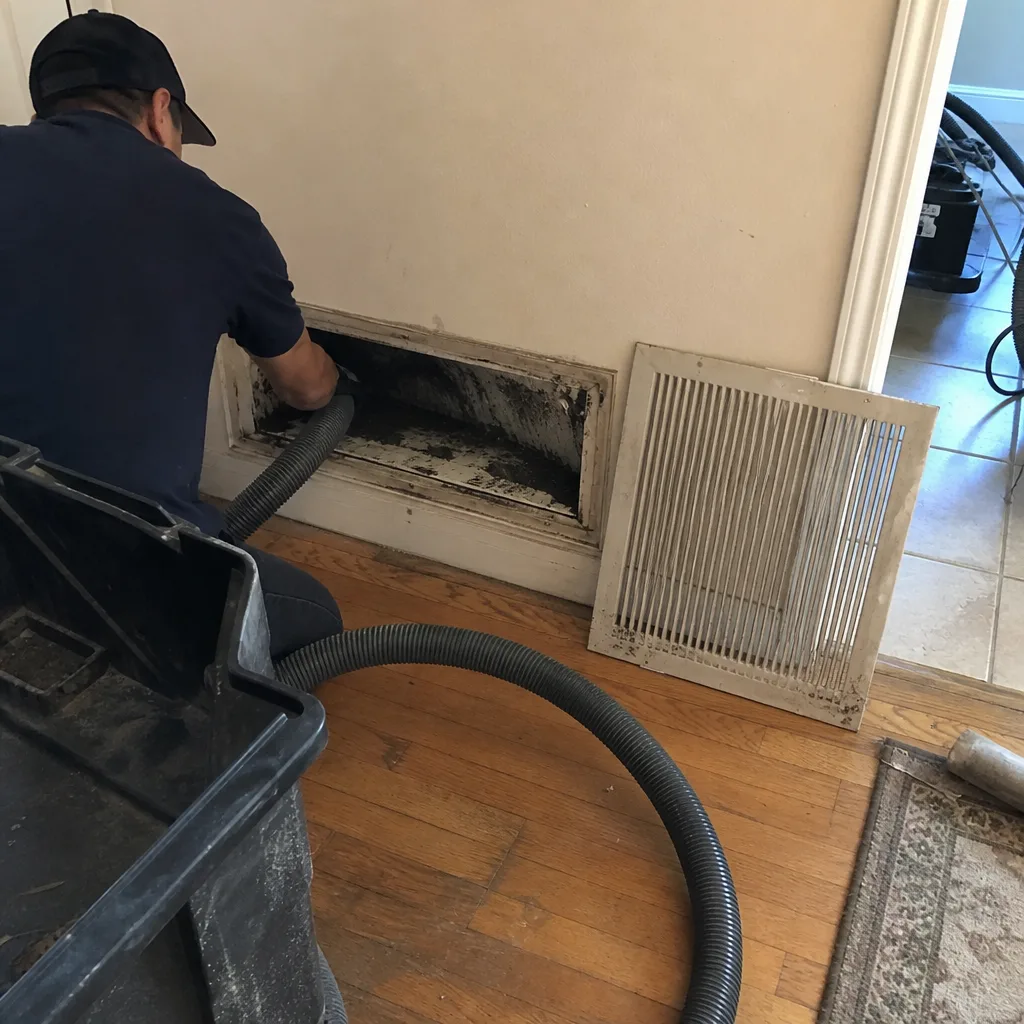 Before
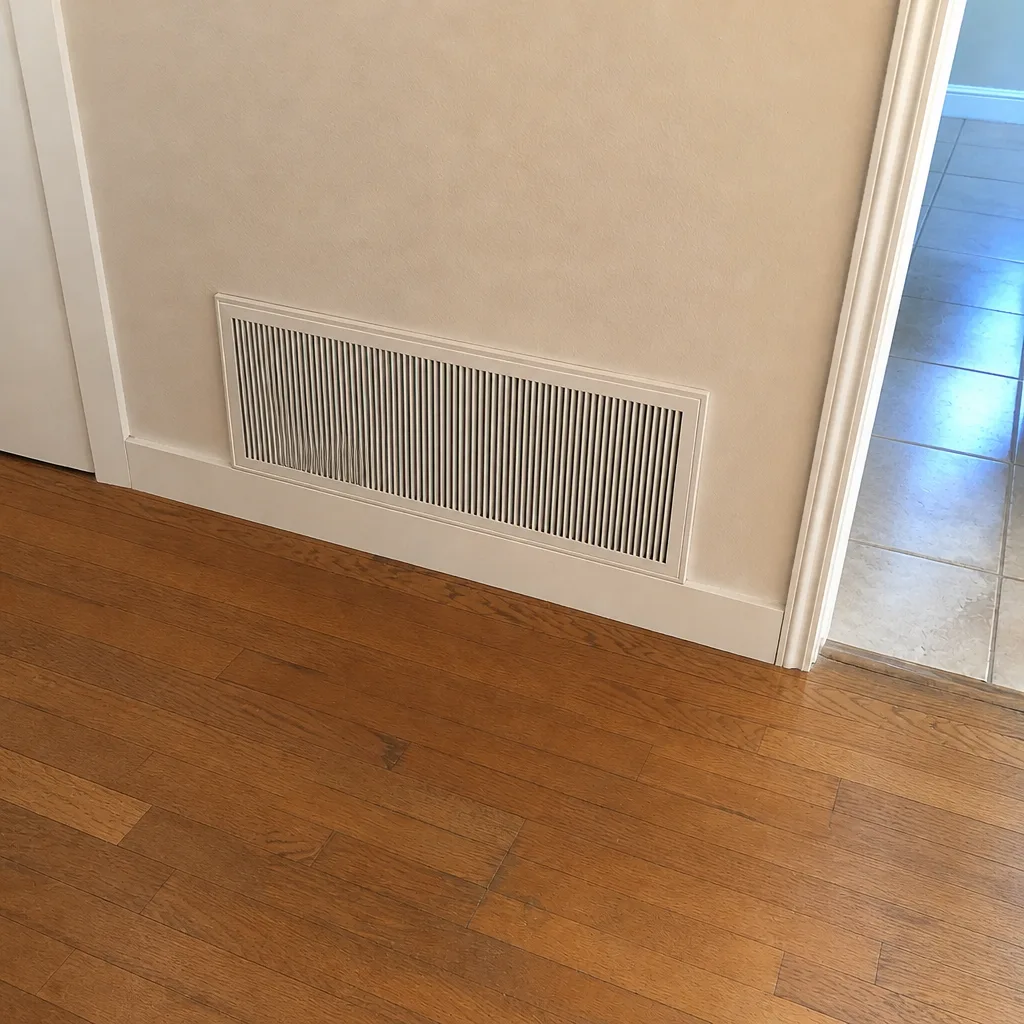 After
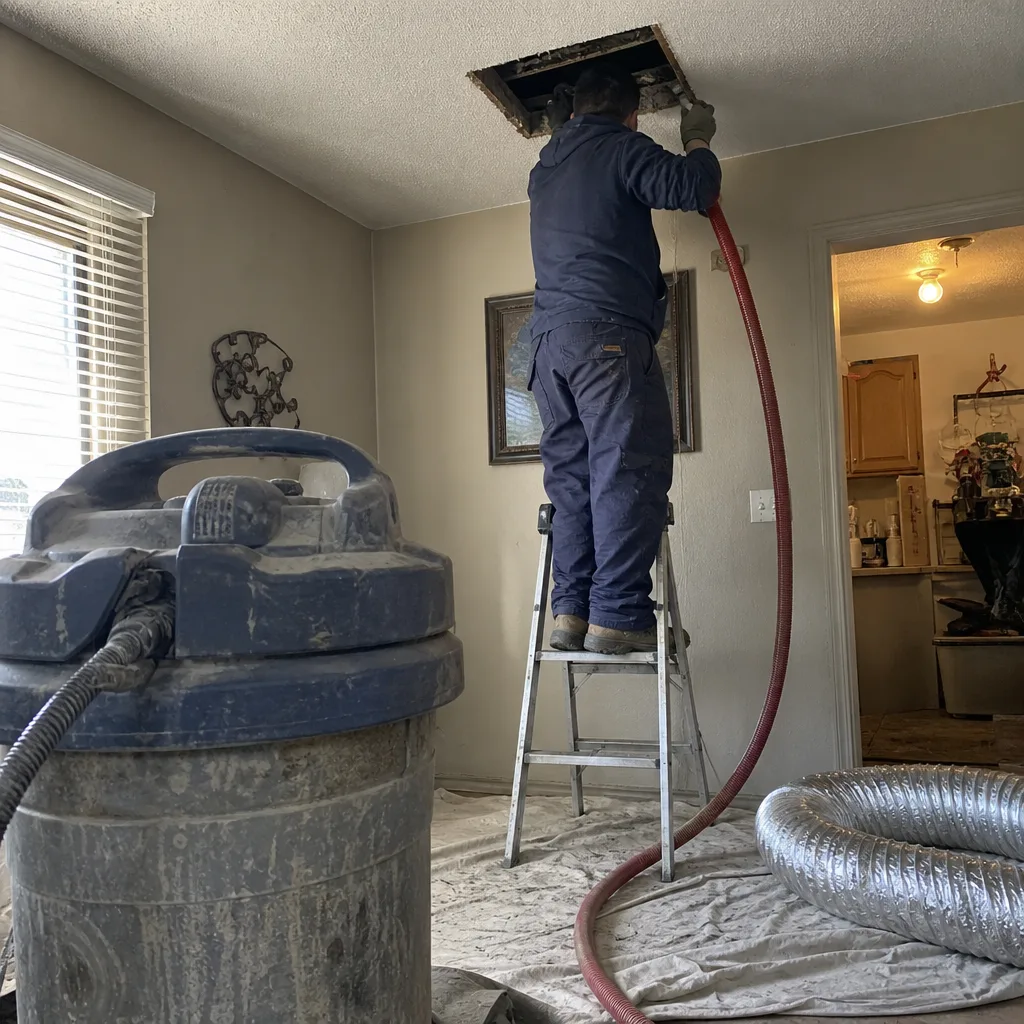 Before
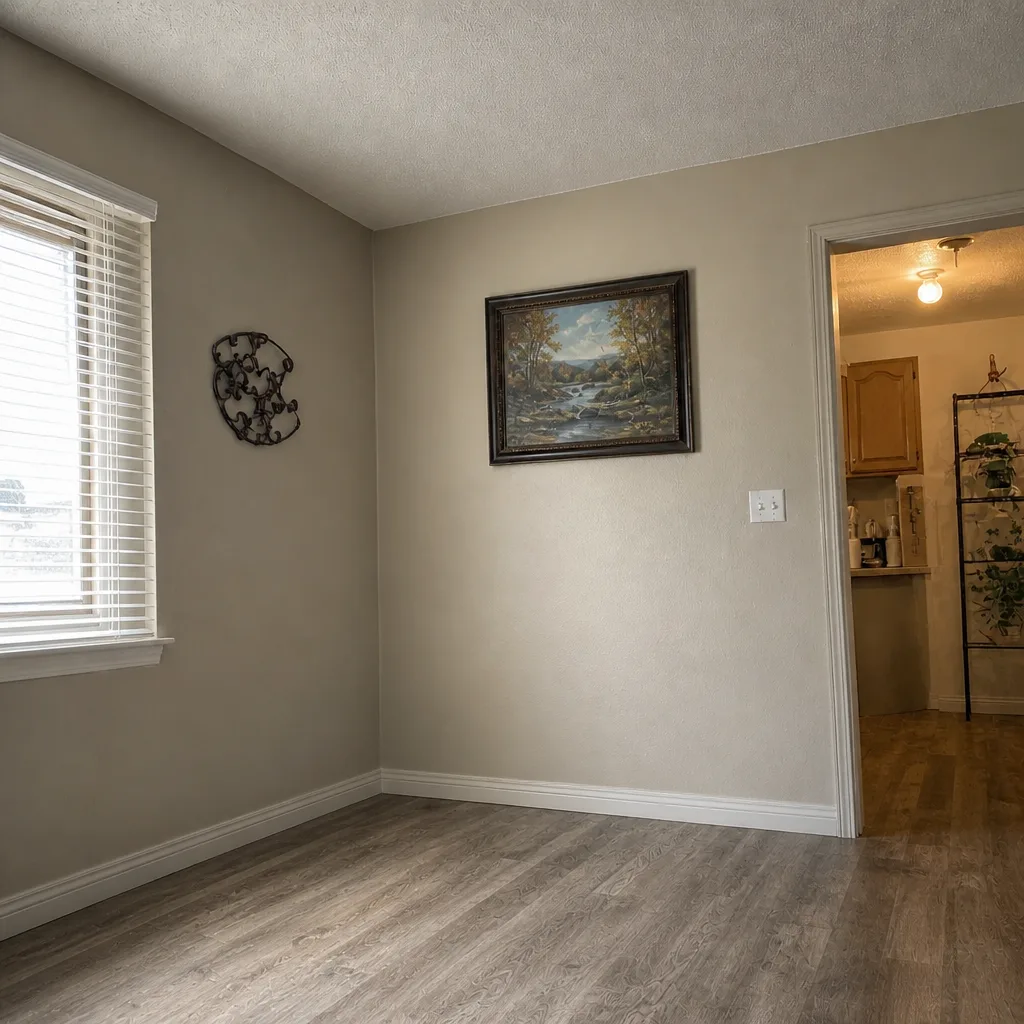 After
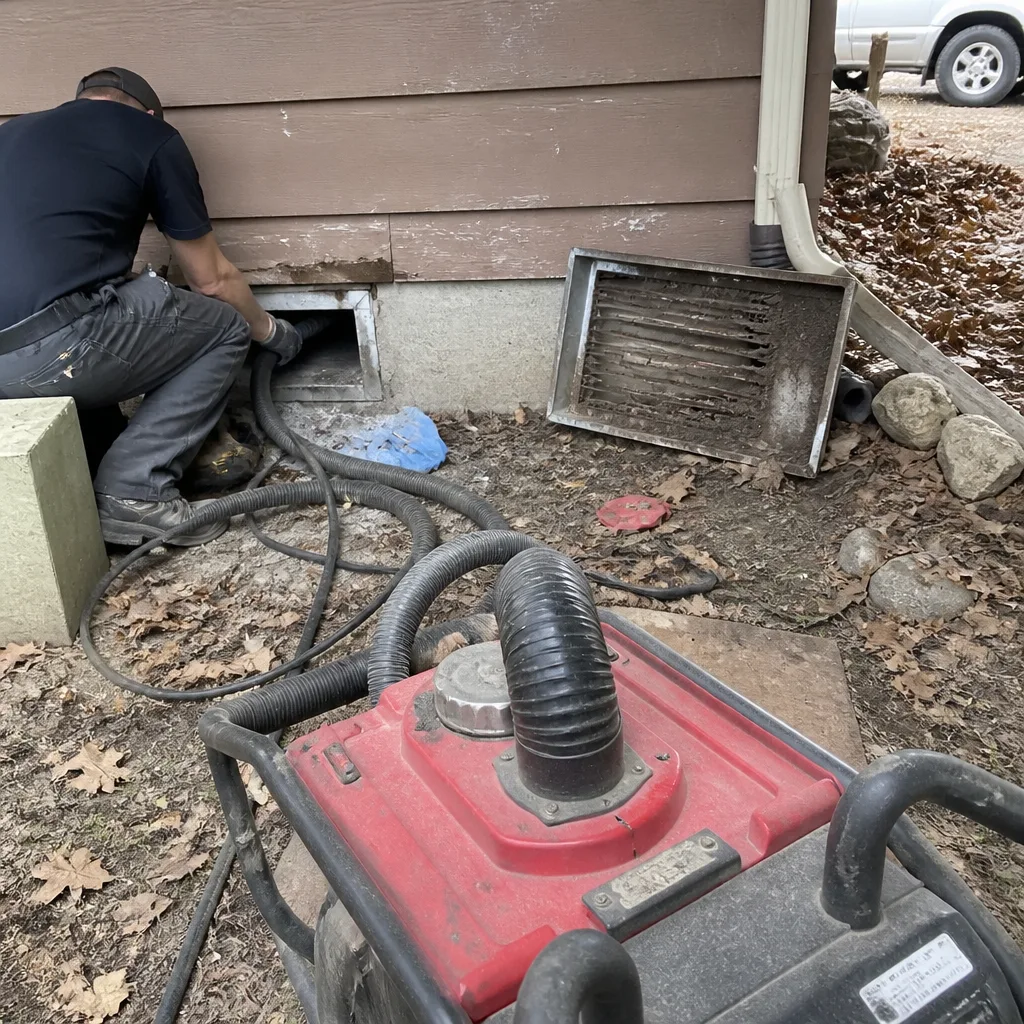 Before
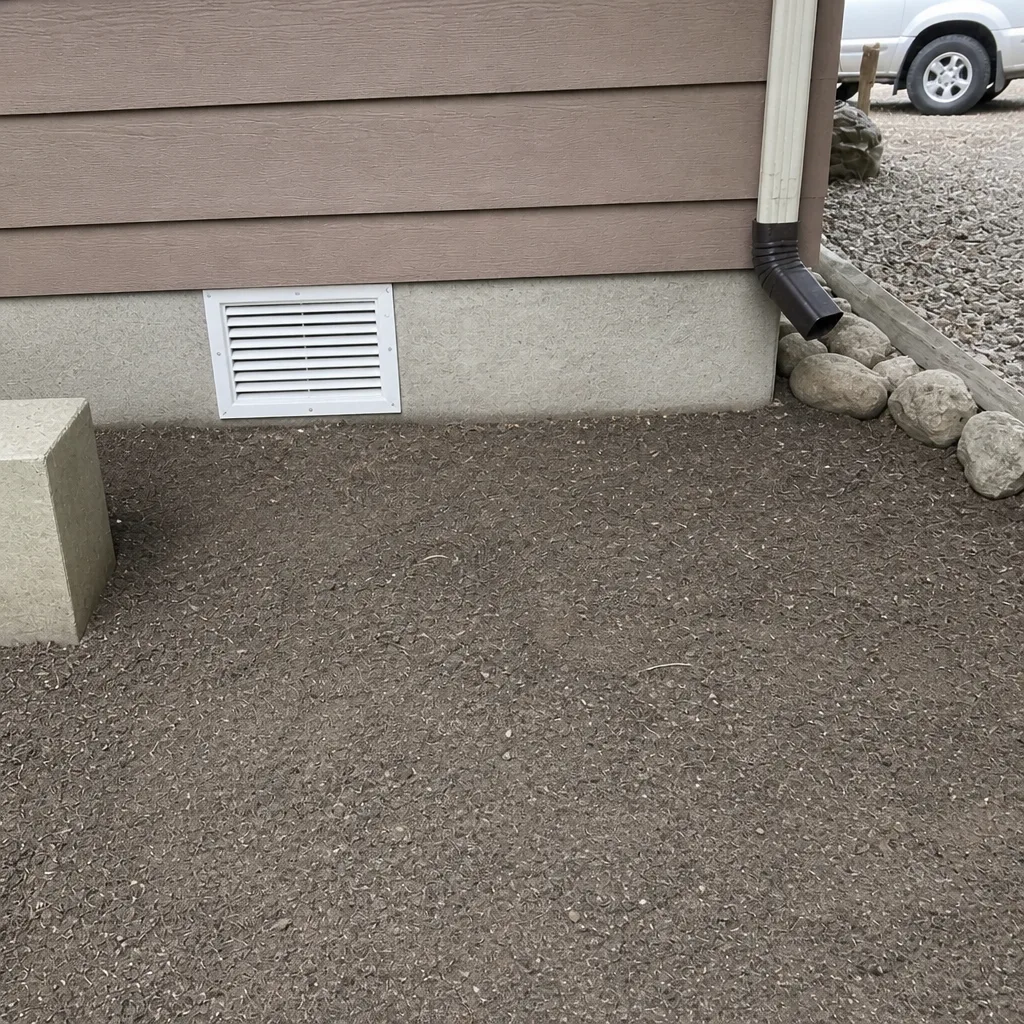 After
When to Call a Professional
Call when two or more of the warning signs in this guide show up together, when airflow asymmetry shows on your room-by-room test in more than two rooms, or when the odor pattern points to biological growth or leakage into an unconditioned space. Call after a renovation that put fine dust into the system, after a water event near the air handler, or when the same dust pattern keeps returning after a full house cleaning. And call if you’re simply not sure – the diagnosis matters as much as the work. Kaysville Air Duct Cleaning offers free estimates in Kaysville – call (877) 792-5756. We answer 24/7. Fast dispatch from 7am to 7pm, Sunday through Friday.
Frequently Asked Questions
Dust returning to surfaces within 48 hours of cleaning is the clearest single sign that ducts need attention, especially when the dust settles in a pattern that matches your register locations. That pattern means the contamination is upstream and being redistributed every cycle. Two or more of the signs in this guide showing up together makes it worth a professional look. Call (877) 792-5756 for a free estimate.
Most homes don’t need it on a fixed schedule – cleaning should follow the warning signs, not the calendar. Homes with pets, recent renovations, allergy sufferers, or a history of moisture near the air handler tend to need it sooner. If the signs in this guide keep recurring after a clean, the right answer is usually filtration or sealing, not more frequent cleaning. Call (877) 792-5756 and we’ll help you sort out which.
Cheap quotes are usually for a supply-side-only pass with a shop vac and a hose, which doesn’t reach the full length of a run or stay sealed at the register. The work doesn’t touch the return plenum, where most of the contamination sits. Ask what equipment will be on site – a rotary-brush system and a HEPA-filtered vacuum is the standard we use (Rotobrush and Nikro), and it’s the difference between a cosmetic job and a real one. Call (877) 792-5756 for an honest estimate on your system.
Before-and-after photos of your own ducts and register runs are the proof, and any crew doing the work should be able to provide them. We document the supply and return sides before and after so you can compare the same section of the same run. If a crew can’t or won’t show you, that’s your answer. Call (877) 792-5756 to schedule and see the standard we use.
Yes, in a specific way – the combination of spring wind events along the Wasatch Front, a long heating season with dry summers, and a lot of homes with return runs through unconditioned basement or crawlspace makes duct leakage and debris accumulation more likely here than in milder climates. That’s why sealing matters as much as cleaning in Kaysville. Call (877) 792-5756 to talk through your home.
Cleaning removes debris from a working system; Duct Repair & Sealing fixes the leaks, separations, and damaged runs that let debris in and conditioned air out. Cleaning a leaky system is temporary because the leak just reintroduces the same problem. We do both under one roof so the system gets clean and stays clean. Call (877) 792-5756 for a free estimate.
The Bottom Line
The warning signs that matter in Kaysville aren’t dramatic – they’re quiet patterns that most homeowners have been told are normal. Dust returning within 48 hours, uneven airflow, a musty note when the system starts, and a dirty return plenum with clean supplies are all diagnostic. So is a home where the dust pattern keeps coming back after a clean. The right response is to diagnose before you act: clean, seal, repair, or add whole-home filtration depending on what the signs actually point to. Our technicians have up to 12 years of experience making that call, and we use professional-grade equipment – Rotobrush, Nikro, and Abatement Technologies – so the diagnosis and the fix come from the same place.
If you’ve read this guide and recognize two or more of these signs in your own home, the next step is simple. Call Kaysville Air Duct Cleaning at (877) 792-5756 for a free estimate. We answer 24/7. Fast dispatch from 7am to 7pm, Sunday through Friday. We’ll walk the system with you, show you what’s actually happening inside the ducts, and give you a written estimate before any work starts. For the larger picture of who we are and what we do, visit Kaysville Air Duct Cleaning.
Written by the team at Kaysville Air Duct Cleaning.